
Wal-Mart Gold
We have a simple one
time $597 fee. Easy to afford, no per-month charges, no
extra costs, no nickel-and-diming or download fees. So,
order now! It won't cost any extra.
I Repeat
-- $597 is all you pay. There is nothing
more to buy and no monthly
fees of any kind.
HERE'S WHAT YOU GET
PART ONE -
WAL-MART GOLD SEMINARS SYSTEM
Your Wal-Mart Gold
System contains 19 audio lesson in mp3 audio files.
You can play them on
your computer or in your car, online or download them to your ipod, cell
phone or computer. You get the accompanying word for word transcripts
that you'll be able to print out or read online.
1. Five Simple Ways to Get In Wal-Mart...Even
If You Have No Money
Section One consists of a 26-minute audio and an
accompanying 15-page transcript.
2. How to Tell If You're Ready For Wal-Mart
Section Two consists of a 12-minute audio and an
accompanying 9-page transcript.
3. How to Prepare For Wal-Mart
Section Three consists of a 16-minute audio and an
accompanying 11-page transcript.
4. How to Research Your Market and Competition
Section Four consists of an 8-minute audio and an
accompanying 7-page transcript.
5. How to Read a Wal-Mart Buyer's Mind
Section Five consists of a 22-minute audio and an
accompanying 13-page transcript.
6. How to Create a Product That Makes Money in
Wal-Mart
Section Six consists of a 27-minute audio and an
accompanying 16-page transcript.
7. How to Know If Your Product Will Sell Before
You Create It
Section Seven consists of a 15-minute audio and an
accompanying 11-page transcript.
8. How to Use Other People's Money to Get in
Wal-Mart
Section Eight consists of a 17-minute audio and an
accompanying 12-page transcript.
9. How to Set Up a Million Dollar Joint Venture
Section Nine consists of a 7-minute audio and an
accompanying 7-page transcript.
10. How to Start or Buy a Business with None of
Your Own Money Down
Section Ten consists of a 27-minute audio and an
accompanying 15-page transcript.
11. Million Dollar Packaging Secrets That Can
Make You Rich
Section Eleven consists of a 23-minute audio and
an accompanying 14-page transcript.
12. How to Merchandize Your Products for
Maximum Sales
Section Twelve consists of a 20-minute audio and
an accompanying 11-page transcript.
13. How to Get Tens of Thousands of Dollars in
Advertising for Pocket Change
Section Thirteen consists of a 18-minute audio and
an accompanying 12-page transcript.
14. How to Make a Fortune Selling to Non-Mass
Market Retailers
Section Fourteen consists of a 15-minute audio and
an accompanying 11-page transcript.
15. Preparing For Sales Calls to Wal-Mart
Buyers
Section Fifteen consists of a 18-minute audio and
an accompanying 12-page transcript.
16. How to Sell Your Products at Trade Shows
Section Sixteen consists of an 11-minute audio and
an accompanying 9-page transcript.
17. How to Finance Your Business Without Paying
Any Interest
Section Seventeen consists of a 6-minute audio and
an accompanying 7-page transcript.
18. How International Businesses Can Sell to
Wal-Marts in the U.S.
Section Eighteen consists of a 13-minute audio and
an accompanying 9-page transcript.
19. It's Your Move - How We Can Help You
Section Nineteen consists of a 5-minute audio and
an accompanying 7-page transcript.
PART TWO -
WAL-MART BONUS
INTERVIEWS.
I've been busy interviewing giants who have been able to get their
products into mass retailers like Wal-Mart, Home Depot, Lows, and more.
I've captured their full story from the humble beginnings to success.
Listen as I dig out every step-by-step secret and method so you can get
the blueprint to do it on your own. This is some of the most powerful
information ever.
1) "How I Personally Sold 45 Million
Dollars Worth Of Products To Wal-Mart and Other Major Retail Giants."
This audio interview consists of a
two-part audio (Part One is 54 minutes and Part Two is 58 minutes) and
accompanying 62-page transcript of both audios.
For the full
description of each interview click here.
2) "I Came To America At Age 15 And Now My Company Employs More Than
1,000 Associates With 5 Distribution Centers Around the Country
Importing Flowers From Colombia And Selling Huge Volumes To Wal-Mart And
Most Of America's Largest Mass Retailers. Learn How I Did It."
This audio interview consists of a
63-minute audio and an accompanying 38-page transcript.
For the full
description of each interview click here.
3) "C'mon! It Can't Be THIS EASY To Get Your Product Into Wal-Mart (
And Become A Millionaire)... Can It?" (Ultimate Wal-Mart Selling
Secrets)
This audio interview
consists of a 61-minute audio and an accompanying 41-page transcript.
For the full
description of each interview click here.
4) How I Got My Product Into Home Depot
This audio interview
consists of a two-part audio (Part One is 31 minutes and Part Two is 25
minutes) and accompanying 39-page transcript of both audios.
For the full
description of each interview click here.
5. Discover The Amazing Winning Secret To Selling To Wal-Mart Many Will
Try And Most Will Fail. Why? Because To Sell To Wal-Mart You Must Have
The One Ingredient That Most Manufactures Are Missing...A Buyer On Your
Side!
This audio interview consists of a
57-minute audio and an accompanying 32-page transcript.
For the full
description of each interview click here.
6. The Only Web Site And Resource You’ll Need To Get Your Products
Sourced, Manufactured, Imported and Sold Into America’s Largest Retail
Stores.
This audio interview consists of a
41-minute audio and an accompanying 28-page transcript.
For the full
description of each interview click here.
7. How To Use Master Brokers To Get Your Product Into Wal-Mart And
Other Large Mass Retailers.
This audio interview
consists of a 48-minute audio and an accompanying 24-page transcript.
For the full
description of each interview click here.
8). 11 Ways To Make Huge Amounts Of Cash Selling To Wal-Mart… Even
During A Recession!
This audio interview consists of a
two-part audio (Part One is 52 minutes and Part Two is 51 minutes) and
accompanying 49-page transcript of both audios.
For the full
description of each interview click here.
HERE'S WHAT WAL-MART GOLD WILL DO FOR
YOU
Play and
Listen to these audios and bonus interviews and you'll gain an
understanding about the most powerful retail organizations know to
man.
You'll be able to
increase your chances of selling into Wal-Mart and other mass retailers.
And you don't have to own your own product or have your own money.
HERE'S HOW TO ORDER . . .
Your
Wal-Mart
Gold System
will
will be sent
instantly
after your
order is
placed
|
Click the Yellow Buy Now Button Below
Note: It may take a second or two for the order window to
open up. Be patient
|
|
Call or
Text
858-692-9461
|
|
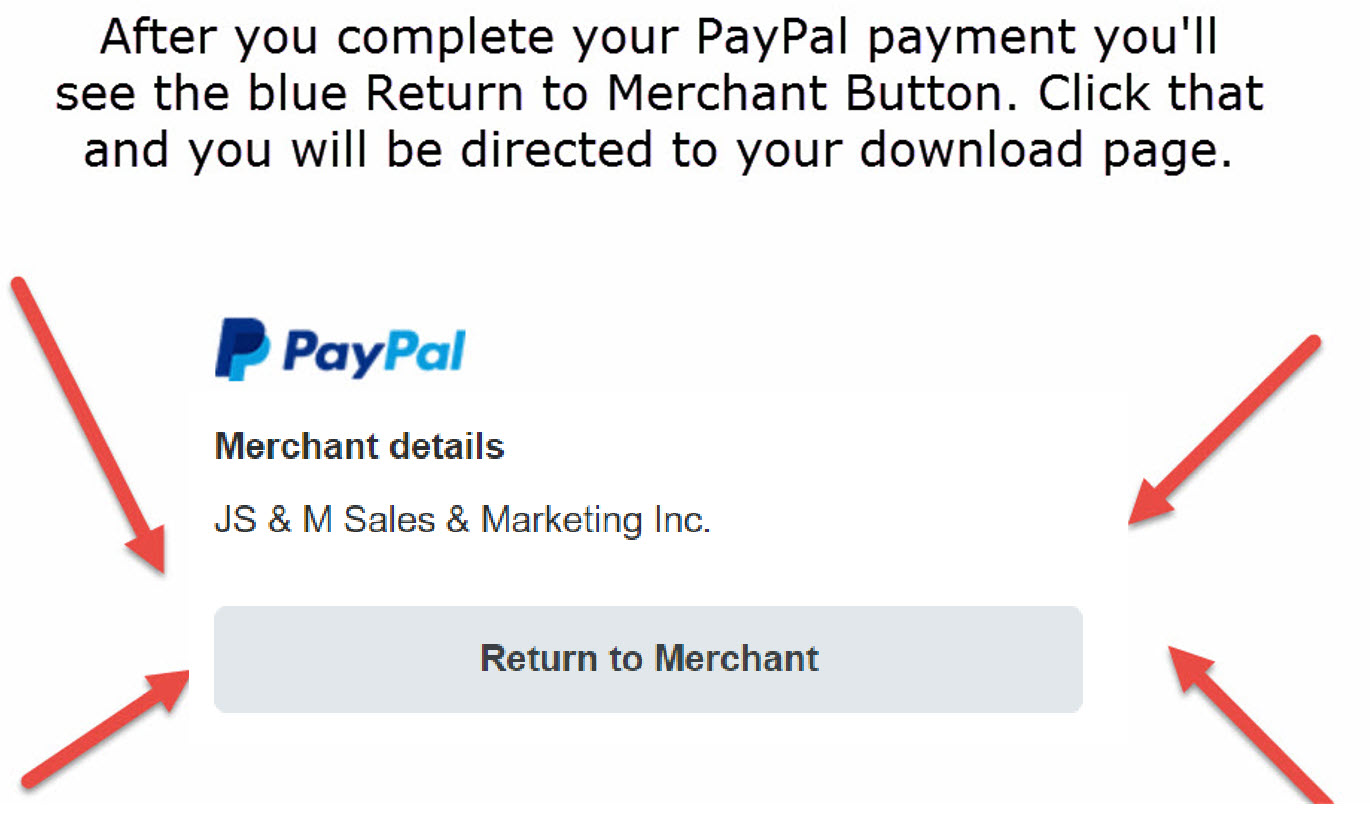
The second
you place your order, Paypal will re-direct you to a page
with a yellow button that when clicked will take you to your
download page.
See the image
below and click on that button to access downloads. I
will also send you the links and page to the Paypal e-mail
address you used when you placed your order.
Wal-Mart Gold Detailed Interview Descriptions Below
You'll be able to
immediately download your copy of The Wal-Mart Gold System which
includes:
* 19 audio lessons in mp3 downloads you can play on
your ipod or cell phone.
* For a very detailed outline of what each of the 19 lessons covers,
click here
* Word for word typed transcripts in PDF you can read online
* Hours of bonus audio interviews with Wal-Mart experts in mp3
* A Business Analysis Solutions Worksheet
* Transcripts of the Best Wal-Mart Gold interviews
* The Wal-Mart Gold Insider's Rolodex!
* ...and more tools to help you succeed!
******************************************************************************
1) "How I Personally Sold 45
Million Dollars Worth Of Products To Wal-Mart and Other Major Retail
Giants."
Every product inventor,
developer and manufacturer dreams of landing their product into retails
giants like Home Depot, Wal-Mart and Target Stores. You have truly hit
the big time when one of these stores takes on and succeeds selling your
product.
But most believe this is a pipe dream only available for someone luckier
then them. But not for my friend Joe. Joe has done it and you can learn
how to do it too. So who Joe?
Joe has had many years of experience in the product development and
marketing of consumer products to mass merchants like Wal-Mart & Target
as well as with selling to independent retailers in many different
distribution channels.
25 years ago he learned the inside workings of one of the the world's
largest consumer products company as a product manager for
Kimberly-Clark (the manufacturer of Kleenex, Huggies diapers and other
familiar products). After leaving Kimberly Klark Joe found his first
company to manufacture and sell children's products to retailers.
Over the last 25 years Joe has founded and grown 4 companies. Two of
them sold over $45 Million of products that he invented to chains like
Wal-Mart, Target and other retailers. He developed and sold 3 complete
product lines consisting of hundreds of products to both Wal-Mart &
Target and one year received the "Best New Vendor" award from Target's
Stationery and School Supply Department.
Within the children's products company he set up a kids club promotion
that got 900 stores and 900,000 kids to participate.
The promotion resulted in an
additional $145 Million is sales for the participating stores in just
one year.
Joe also built and sold a mail order catalog company and a promotional
products company. Joe also has extensive experience in other
distribution channels besides retail.
You are about hear Joe's story and how he did it. It's a wild ride so
hang on tight. Look out Wal-Mart, your next big product may be supplied
by the person listening to this interview now. Lets do it!
This audio interview consists of a two-part audio (Part One is 54
minutes and Part Two is 58 minutes) and accompanying 62-page transcript
of both audios.
******************************************************************************
2) "I Came To America At Age 15 And Now My Company Employs More Than
1,000 Associates With 5 Distribution Centers Around the Country
Importing Flowers From Colombia And Selling Huge Volumes To Wal-Mart And
Most Of America's Largest Mass Retailers. Learn How I Did It."
This is an interview that I did with a gentleman named Edgar who has
been dubbed “The Latin King of Flowers.” Although he seems a bit
embarrassed by his nickname, the success story that he tells will prove
that it is quite justified and well-earned.
Born in Bogotá, Columbia, Edgar came to the United States as an exchange
student when he was 15 years old. He was looking for good opportunities
and wanted to live in the United States. He eventually settled in Miami
to attend college and graduated with a degree in International Business
and Management.
While he was in college, he started toying with flowers. A friend of his
father’s in Columbia was a grower and exporter of flowers. Edgar began
his career by importing small amounts of flowers from this farm. He
would then go around and sell the flowers, mainly roses, to local flower
shops.
His business really started to take off in 1985 when he hired an expert
in the flower export business. His goal at this point was to really
understand the business. He learned that, instead of selling small
amounts of flowers to local florists, by importing large amounts of
flowers and then selling them to large wholesalers, he could make more
money. You’ll hear Edgar explain the step-by-step daily routine for
importing and selling his flowers during this time. You’ll also hear
some horror stories about how a good number of flower shipments were
totally lost.
Throughout the interview, Edgar discusses the evolution of the flower
industry and the many innovative steps that he took in his own business
to have the best quality products and the most satisfied customers.
You’ll be especially interested to hear about Edgar’s successful
partnership with Wal-Mart. You see, he bypassed dealing with Bentonville
by partnering with a company that sold potted plants and that was
already in Wal-Mart and several large supermarket chains. The floral
programs he helped develop in conjunction with the Wal-Mart team were an
immediate success for the large retailers.
Later Edgar sold his company to US Floral Products. However, he was
given the opportunity to buy back the Bouquet Division when USA Floral
Products went into Chapter 11 in 2001.
Listen as I probe for Edgar’s experiences and success with Wal-Mart:
• He has set up an experienced and knowledgeable group of associates to
specifically cater to Wal-Mart on a day-to-day basis.
• He gives advice on how companies should work with Wal-Mart – what
Wal-Mart expects and what you must deliver.
• Why Wal-Mart is an excellent company to deal with.
• How Edgar takes advantage of technology such as EDI with Wal-Mart to
invoice and get paid.
• What his philosophies are when dealing with Wal-Mart and other large
retailers.
• How his company participates in Wal-Mart's commerce program, where
orders are placed on Wal-Mart's web site and how deliveries are made
directly to the end customer by Edgar’s company.
• Edgar currently services approximately 900 Wal-Mart stores east of the
Rocky Mountains and would like to reach out to the West Coast by opening
a strategic regional facility.
This entire interview is packed with great information on topics such as
import/export, innovations to the flower industry, business strategies,
and how to be successful at operating a business dealing with perishable
products.
It’s an enjoyable interview that I encourage you to take the time to
listen to. Not only will you learn a great deal about getting your
product into Wal-Mart and working with Wal-Mart, but you’ll hear the
story of how a young man from a third-world country came to America and,
with hard work and ingenuity, turned his passion for flowers into a
multi-million dollar business.
This audio interview consists of a 63-minute audio and an accompanying
38-page transcript.
******************************************************************************
3) "C'mon! It Can't Be THIS EASY To Get Your Product Into Wal-Mart (
And Become A Millionaire)... Can It?" (Ultimate Wal-Mart Selling
Secrets)
Here’s an interview I did with a man named Lanny who is an expert on the
topic of getting products into large retailers – especially Wal-Mart.
During this discussion, you’ll hear the realities of getting a product
into Wal-Mart based on Lanny’s experiences which spans 15 years. Lanny’s
education began as a sales rep for Proctor and Gamble. At the time,
there were still many independent grocers that he dealt with directly.
This was the best education Lanny could have received because, with the
independent grocers, he was able to learn all areas of retail
businesses.
You learn the two critical types of distribution methods for packaged
goods:
• Warehouse
• Direct Store Delivery (DSD)
The definitions of these distribution methods are important when Lanny
explains why some companies prefer (or demand) DSD over Warehouse. The
next definition, “Category,” is integral to the interview. Listen as
Lanny explains what a category is in retailing and why good category
management is essential to maintain good revenues. Additionally,
Category Management is what enables small manufacturers to compete with
large manufacturers in retailers such as Wal-Mart.
If you have a product that you would like to get into Wal-Mart or some
other major retail outlets, you must do the following:
• Have the manufacturing capabilities to supply your product to the
major retail outlet.
• Determine how your product can help the overall category.
• You must know everything about the store you wish to approach and
about that category.
• Be able to prove that there is a glaring need in that category that is
not being met.
• Be able to give the buyer a compelling reason to buy your product (the
product’s USP)
After leaving Proctor & Gamble, Lanny worked for Frito Lay and
subsequently became a consultant to help retailers become more
profitable by integrating more efficient systems in place. You can get
your product into Wal-Mart. It’s not true that only major companies get
into Wal-Mart. Wal-Mart has put processes in place to ensure that
smaller companies can get into Wal-Mart. However, every company must
follow the business process. You’ll learn the seven best ways for people
to get their products into Wal-Mart. You’ll hear about why it’s easier
to get a food item into Wal-Mart than, say, an electronic item. Learn
about Wal-Mart's “Store the Community” program where Wal-Mart supports
local vendors whose product have community appeal and exposure.
Hear how get your product into Wal-Mart by presenting your product to
the buyer as a potential Value Producing Item (VPI). You’ll learn what
the VPI program is and how every buyer must participates in it.
Learn why the best and fastest way to get a product into Wal-Mart is if
the product is environmentally friendly. Learn why Wal-Mart is concerned
with the environment.
This audio interview consists of a 61-minute audio and an accompanying
41-page transcript.
******************************************************************************
4)
How I Got My Product Into Home Depot
Here is a recording that will excite both inventors as well as anyone
who likes a good story. Get ready for an education in invention and
marketing that you cannot get anywhere else!
John has been the inventor of many successful products. One in
particular is a product named EasyGlide, which is basically a polymer
that John had packaged into an aerosol can. When sprayed into drapery or
sliding door tracks, it facilitates the movement of the draperies or
sliding doors by more than 50%.
He worked very hard and actually got his product into the giant Home
Depot chain of stores, where his product’s price undercut all of the
competition. It was, and still is, a very successful product.
John explains to me that a large company that had almost two hundred
products in Home Depot, had approached him to not only buy the rights to
EasyGlide, but to hire him at a handsome salary plus royalties to
operate that division as well. John accepted their offer and, although
his current salary is lucrative and his job is enjoyable, John wants to
do something new and different.
You see, John not only loves inventions – he also loves to help people.
For years, he has been approached by people who have invented products
and want to know how to get that product into Home Depot or its largest
competitor, Lowe’s. If John believes the product is right for the
market, he becomes a consultant to the inventor, giving the inventor all
of the tips and secrets that he knows to get the product into the
desired marketplace.
The problem was that John always gives his information away for free!
One of his good friends and trusted advisors kept telling him that he
had to stop giving this information away for free. In calling around for
advice, he ended up calling me. John tells how his EasyGlide product
came to fruition and new plans for the polymer in other industries. You
will also hear about some of the other products invented and sold by
John – and you’ve most likely heard of all of them.
In this recording you will hear me do a consultation with John, asking
him what ideas he has about what he wanted to do with all of his
experience.
As I ask John what specific questions people have asked him (it is
mainly, “How do I get my product into Home Depot?”), it occurs to me
that the answers to all of these questions would make a GREAT
information product!
Listen as I give John some ideas about what his information product
could consist of and how he could generate leads and market it. We also
discuss how I could help him to actually develop his information product
with audio interviews and perhaps copywriting for sales letters and
written content. I also give him some ideas about pricing the product.
John digresses to an incident experienced by one of his mentors, the
actual inventor of the vice grips sold by Sears/Craftsman and several
other stores. Listen to how this unfortunate gentleman actually lost the
rights to this now popular product and only received a pittance for all
of his hard work.
Even though John was aware of what had happened to his mentor, John
actually got into a similar situation with a key-based product that he
had invented and produced. He got involved with another company who
contracted with John to sell them millions of this product. Listen as
John explains that he now believes that they had absolutely no intention
of paying for the products. Instead, they offered to buy his company.
John refused and the result was that they went to court. You’ll hear how
this large company tried to settle with John and how John refused.
John’s story is a lesson in itself in what to look out for when doing
business with big, ruthless companies.
Going back to an information product for inventors, you will hear me
explain how this type of product could be immensely successful because
of all of the people who have patented inventions and would give an arm
and a leg to know how to market their product to giants like Home Depot.
You’ll hear my best advice about how John might market his information
product, including conducting seminars versus other types of lead
generation techniques without having to travel constantly.
As John tells me of some of his recent experiences helping other
inventors package and market their products, another idea comes to mind.
Perhaps instead of creating an information product, John should become a
consultant as an expert in the field of successfully marketing new
products. You will hear my ideas and advice about how John could have a
fun and lucrative business as a consultant. How about combining
consulting with an information product? With all of the high-powered
contacts that John has in several industries, what a perfect business
this would be!
At first, John is doubtful that his knowledge is worth anything. But as
we talk, John starts to realize that he is undervaluing his services and
needs to start charging for his work and advice. John definitely sounds
excited, wants to think about it and promises to call me back about
where he wants to go from here. John needed to go over his contract with
his employer with a fine-tooth comb to make sure that being a consultant
or developing an information product would not go against any provisions
in the contract.
Unfortunately, I never did hear from John again. My educated guess is
that, after looking into his contract, John probably found that anything
he develops would be owned by his employer.
Although the outcome of my interview with John is unfortunate, I must
say that the interview, itself, will make you realize many things about
inventing, marketing your invention to large companies, selling the
rights to your product to large companies, and I hope that the mistakes
made by John as well as his fellow inventors will help you to be aware
of the good and the bad things to look for on your road to success.
Enjoy!
This audio interview consists of a two-part audio (Part One is 31
minutes and Part Two is 25 minutes) and accompanying 39-page transcript
of both audios.
***************************************************************************
5) Discover The Amazing Winning Secret
To Selling To Wal-Mart Many Will Try And Most Will Fail. Why? Because To
Sell To Wal-Mart You Must Have The One Ingredient That Most Manufactures
Are Missing...A Buyer On Your Side!
Here’s an exclusive interview with a Wal-Mart consultant named Richard
G. With over 35 years of experience, Richard and his team provides
business development consulting services to international manufacturers
who want to enter the US market.
Richard also works with domestic manufactures to enhance their business
either by finding new channels of trade or finding better ways to
communicate their company’s message.
Richard has helped his clients sell their products to America's
mega-retailers such as Wal-Mart, Kmart, Toys-R-US, Kroger, Safeway, and
CVS.
You'll learn the best ways to work with the buyers at Wal-Mart and about
one little known pricing strategy that will help you get your product in
before your competition.
Hear the dirty little secret why Wal-Mart buyers only work with
companies who already have successful, proven products.
If your a manufacturer and your worried about damaging existing sales
with your other customers, don't worry too much. Richard will show you
how to keep these customers and still be able to sell to Wal-Mart.
You’ll hear Richard explain why distributing your product to Wal-Mart is
a smart way to build brand equity in your product, even if you make very
little profits.
Richard gives other important advice like...
• How to understanding both the potential supplier’s corporate culture
and the retailer’s corporate culture and how it will let you know what
to expect before a sale is made.
• What the true role of the ambassador is and how to ensure that there
will be no surprises during final negotiations.
• How to get the attention of a buyer by quoting revenues rather then
unit profits.
• How to learn what motivates buyers to accept or reject products.
• How use licensing to increase the sell-through for your products
• What an importer should keep in mind with regard to ports of entry in
the United States.
• Learn ways to ensure that the retailer will receive your products in a
timely manner.
This interview with Richard is packed with valuable information. It
contains years of trial and error and a wealth of understanding for
anyone who is considering getting their product into Wal-Mart or any of
the other large mega-retailers. Listen and enjoy!
This audio interview consists of a 57-minute audio and an accompanying
32-page transcript.
******************************************************************************
6) The Only Web Site And Resource
You’ll Need To Get Your Products Sourced, Manufactured, Imported and
Sold Into America’s Largest Retail Stores.
The Federation of International Trade Associations (FITA) was founded in
1984. Its mission is to foster international trade by strengthening the
role of local, regional, and national trade associations.
In this interview with Barney, FITA’s web master and advertising expert,
you will learn about how the FITA web site is the Number One portal for
both export and import international trade. Barney and I begin by
discussing how to use the FITA web site (www.fita.org).
The site contains over 500 different links to different products and
services to help American manufacturers to safely export their products
to any country in the world. Additionally, if yours is an international
company wanting to import your products into the United States, the web
site is the source for questions, answers, and logistics on bring your
product to the United States.
One important term that Barney introduces is the “trade lead.” Trade
leads were started in 1993 by the United Nations to get the word out
about products that third-world countries had for sale. At that time,
the Internet was still in its infancy and was not used. Rather, there
were offices called Trade Points set up in strategic cities of the world
where a person could go to obtain the latest list of trade leads.
Now, with the advent of the Internet, the Trade Point offices have been
bypassed and everything is handled online. Further, now anyone can post
a trade lead and Barney and I discuss how there are a lot of trade lead
scams online and what to look for to identify a scam.
There are currently approximately 700 web sites that contain trade
leads. In China, it’s really become a big business. The two main Chinese
trade lead sites are AliBaba and Global Sources and they basically do
what the UN used to do. However, instead of their services being free,
they charge factories to list their trade leads.
The FITA web site has 500 associations having to do with international
trade as members. You will hear Barney give examples of some of the
associations that are members of FITA.
FITA’s web site is free for people to browse but only members who pay a
small fee get access to their database of respected trade systems. This
is one way the FITA qualifies its trade association members, such as
AliBaba, Global Sources, and Trade India.
Barney gives us a hypothetical example of how a US manufacturer can use
FITA to get into Business to Business exporting. First, the manufacturer
would put his trade lead information into the databases of several trade
associations. Within a few weeks, the manufacturer would begin getting
emails from interested parties around the world and you may begin
negotiating with them. Barney warns that you have to make sure that the
buyer can and will pay you. There are many complications with
international trade and in fact, most transactions don’t get completed
because of these complications.
We discuss how international trade, especially in Asia, is very
different than doing business only in the US due to the cultural aspects
of the country of the person you are dealing with. It’s all about
building relationships and trust. Barney advises that the most important
thing a new importer or exporter must learn is patience. Additionally,
it would behoove an importer or exporter to learn all of the “hidden”
obstacles that he may be faced with in different countries.
FITA’s web site has lots of information about doing business
internationally. When you look at www.fita.org, you will be amazed with
the amount of useful information in addition to the trade association
links that you will find such as:
• Detailed international market research reports.
• FITA’s Really Useful Sites for International Trade email newsletter.
• How Export Management Companies will perform all of the tasks
necessary to export your product. FITA’s web site has a list of Export
Management Companies.
• Detailed reports of the business environments of most countries.
• Links to export training.
• Links to sites that will help to get your product into another
country.
• Lists of Foreign Trade Zones, how they are useful and can save you
money.
• Different kinds of trade software to assist with logistics
• Links to companies who deal exclusively with international travel.
• Books promoted by FITA about international trade.
• Government security issues
…and tons of other great resources!
Barney and I discuss many other topics, such as outsourcing and how it
can be dangerous to US companies. You’ll want to listen to the entire
interview so as not to miss any crucial details.
The bottom line is that, in our growing Global Economy, US manufacturers
cannot afford to only sell their products in the US. Exporting products
to other countries will soon be a necessity.
Everything you need to do importing and exporting can be found on
www.fita.org. It could be time for you to investigate what other
companies are doing in the way of trade and how you, too, can get
involved.
This audio interview consists of a 41-minute audio and an accompanying
28-page transcript.
******************************************************************************
7) How To Use Master Brokers To Get
Your Product Into Wal-Mart And Other Large Mass Retailers.
In this interview with Bill, you’ll hear about an alternative tactic to
get your product into Wal-Mart, Costco, Kroger, or any of the other mass
merchandisers in the US. Bill refers to himself as a “scout” but his
expertise is in dealing with Master Brokers. He scouts for product
opportunities. When he finds a good product, he contacts and hires a
Master Broker to try to get the Master Broker to pick up the product as
a project.
A Master Broker represents you and your product and lobbies mass
merchandiser purchasing agents to get your product into their stores.
Bill explains that there are less than one hundred Master Brokers in the
US at this time and that each Master Broker specializes in one category,
such as dietary supplements, produce, etc.
Bill explains that a common misconception of manufacturers is that they
believe that their own product will, indeed, sell. The truth is that,
when approaching a single mass merchandiser, the supplier has a 1%
chance to get their product into the store! Bill goes on to explain that
if your product already has advertising AND you are being represented by
a Master Broker, that you have a 90% chance of that initial 1% chance to
get your product into the store. Further, if your product does not
already have advertising and you do not have a Master Broker, you only
have a 1% chance of that initial 1% chance to get your product into the
store. Yes, it’s a bit confusing but suffice to say that the chances are
slim that your product will be picked up by any mass retailer.
So what does a Master Broker do once he accepts a product? Master
Brokers have sub-brokers all across the US in different regions. These
sub-brokers specialize in lobbying purchasing agents of mass retailers.
If a product is approved by a retailer’s purchasing agent, the Master
Broker makes a commission and pays each of his sub-brokers a commission.
The advantages of using a Master Broker are many:
• The Master Broker and his sub-brokers do research and develop a
marketing plan for your product.
• Since multiple sub-brokers under a single Master Broker are working on
your behalf, the marketing plan is easier to maintain than if you hired
many different brokers.
• Once a Master Broker approves a project, your product gets immediate
exposure to every mass retail chain in the US.
• When a sub-broker deals with a purchasing agent, most often, the
purchasing agent is already familiar with the sub-broker. Thus,
appointments to present products occur more quickly and are more
organized because the purchasing agent knows that the sub-broker has
done his homework and is ready to do business.
To give a more complete picture of the process, Bill gives us a case
study of a product that he was able to get into the mass retailers – an
energy bar. It already had advertising but the manufacturer was having
trouble selling them. The manufacturer approached Bill and asked if he
would pick up this line of energy bars. They had an expiration date that
was approaching and they needed to be sold. Bill obtained samples and
determined the margins on the product because the product must meet the
pricing points.
Bill goes on to give an example of what would happen next. Bill would
find a Master Broker to take on the product. So, if the sales price is
$1.99 and the wholesale price is $1.20, the Master Broker would buy the
energy bars for 25% less than the wholesale price of $1.20. Then the
Master Broker would go to a mass retailer to sell each energy bat for
$1.20 and tell the retailer that the sales price is $1.99. Without the
right pricing, the Master Broker and his sub-brokers don’t make anything
and the product cannot be sold.
Mass merchandisers such as Wal-Mart want your product to already have
advertising because it will have product recognition. As Bill says, they
don’t want your product to get lost on the shelf. Additionally, Wal-Mart
gets free advertising when you are advertising on TV. All Wal-Mart has
to do is provide a tag to buy this product at Wal-Mart. Bill refers to
new products (new to the marketplace and not yet advertised) as
“pioneers.” He prefers to deal with established products and finds it
very difficult and time-consuming to represent pioneer products. Of
course, Wal-Mart's buyers consider any product an opportunity so they
will listen.
Once your product is in just one of the major mass merchandisers stores,
an Information Resources, Inc. (IRIS) report will exist for it. An IRI
report tracks your product’s sales and other retailers will look at your
product’s IRI report. The advantage of having a product with a good IRI
report is that you can show that IRI report to purchasing agents of
other mass merchandisers when trying to get your product into their
stores.
We go on to discuss how much capital is necessary to deal with one of
these mass merchandisers. Listen as Bill gives advice about going to a
bank to finance the production of the large quantities of your product
that you will be expected to produce for a mass merchandiser and how a
purchase order from Wal-Mart, Target or any mass merchandiser is as good
as gold by the bank Bill recommends.
This audio interview consists of a 48-minute audio and an accompanying
24-page transcript.
*********************************************************************************
8) 11 Ways To Make Huge Amounts Of
Cash Selling To Wal-Mart… Even During A Recession!
Wal-Mart is the world’s largest retailer and I’ve secured an exclusive
interview with one of the foremost experts on Wal-Mart. His name is
Michael. Michael is an international speaker, author, and writer. He’s
worked in Bentonville, Arkansas for Wal-Mart as the director of people
for the headquarters office where he worked daily with Sam Walton.
Previously to Wal-Mart, he worked for PepsiCo’s Frito-Lay division in
the sales organization and headquarters staff assignments. He has
experience as a turnaround specialist who’s participated in several
business turnarounds. He has appeared on CCN, CNBC, FN, CBS, National
Radio, Bloomberg’s TV. He is considered the authority on Wal-Mart. The
giant retailer’s own public relation department has referred Bird Dog to
interviewers who are interested in gaining insight into this massive
company. He recently completed his second book entitled, The Ten Rules
Of Sam Walton: Success Secrets From Remarkable Results.
This two hour interview is going to give you an edge over your
competition to show you ways to understand Wal-Mart, to give you a
competitive advantage on pricing strategies and marketing strategies in
selling your product into Wal-Mart. I hope you enjoy it. We’ve got a lot
to listen to. Let’s get going.
This audio interview consists of a two-part audio (Part One is 52
minutes and Part Two is 51 minutes) and accompanying 49-page transcript
of both audios.
Your
Wal-Mart Gold System will be sent
instantly after your order is
placed.
|
Click the Yellow Buy Now
Button Below
Note: It may take a
second or two for
the order window to
open up. Be patient
|
|
Call or
Text 858-692-9461
|
|
|
|
The second
you place your order, Paypal will re-direct you to a page
with a yellow button that when clicked will take you to your
download page.
See the image
below and click on that button to access downloads. I
will also send you the links and page to the Paypal e-mail
address you used when you placed your order.
If you have any questions at all, feel free to call me at 858-692-9461.